Search Results for: life skills

How Do I Teach Life Skills Without Adding Another Subject?

You do not add them. You stop doing things for children that they are capable of doing themselves, which is slower at first and is the whole curriculum.

The reason it does not happen naturally

It is faster to do it yourself. A seven-year-old folding laundry takes four times as long and produces worse results, so most households quietly absorb the work and the child arrives at eighteen having never done it.

The cost of teaching is paid once. The cost of not teaching is paid for a decade.

Attach skills to things already happening

Meals happen anyway, so cooking is free to teach. Laundry happens anyway. Groceries happen anyway, and a child comparing unit prices in an aisle is doing genuine mathematics.

Nothing new goes on the schedule. The same task simply takes longer and has a second purpose.

The short list that matters most

By twelve: cook several real meals, do laundry start to finish, clean a bathroom properly, handle basic money, write a respectful message to an adult.

By eighteen: a bank account they manage, a budget they have actually kept, a job or substantial volunteer work, scheduling their own appointments, basic car and home maintenance, and the ability to make a phone call to a stranger and ask for something.

That last one sounds small and is not. A great many capable young adults are stalled by it.

Let the results be bad for a while

The eggs will be overcooked and the shirts will be folded wrong. Correcting every attempt teaches children that it is not really theirs and they may as well stop.

Give the task away completely, accept the standard for a season, and raise it gradually.

Hand over decisions too

Older teens should be managing their own schedule and deadlines, with the natural consequences left intact. Learning to miss something and recover is a skill best practiced while still living at home.

Listen to this

It is our 13th birthday all month long.

The Ultimate Homeschool Podcast Network turns 13 this October, and we are giving away more than $1,500 in prizes across four drawings. One entry puts you in all of them, and everyone who enters gets Sweet Treats, a gathered-up collection of free resources from the hosts across the network.

Enter the Sweet 13 Giveaway

Essential Life Skills for Kids: Practical Lessons Every Homeschool Should Teach

Life Skills | With the advance in technology many major, must-know life skills are forgotten. In this episode, we roll up our sleeves and discuss the important life skills you kids must learn. | #podcast #homeschoolpodcast #lifeskills

Must-Know Life Skills – Episode 343

Sponsored by CTCMath.com Get a free trial!

In today’s world of instant information and smartphone convenience, many young people are growing up without the practical and personal life skills they truly need. In this episode of Vintage Homeschool Moms, we roll up our sleeves and talk about the must-know life skills every child should learn before adulthood.

Life skills aren’t just about survival in the wilderness—they’re the everyday habits, disciplines, and practical abilities that build confidence, independence, and character. From faith and convictions to cooking a meal or managing money, these lessons will serve your kids for a lifetime.

Here’s a look at what we cover:

Personal Life Skills

  • Faith: Knowing what you believe, why you believe it, and how to articulate and defend it.

  • Communication: Speaking clearly, listening respectfully, and even cell phone etiquette.

  • Critical Thinking: Making decisions, solving problems, and discerning truth from opinion.

  • Self-Control & Convictions: Standing firm in beliefs, managing emotions, and respecting differences.

  • Coping with Stress: Identifying healthy vs. unhealthy coping strategies and reducing stress.

Practical Life Skills

  • Cooking, cleaning, and personal hygiene.

  • Meal planning, grocery shopping, and basic home maintenance.

  • Money management: saving, spending, tithing, and understanding credit vs. debit.

  • Writing and communication: emails, letters, and professional etiquette.

  • Navigation and transportation: maps, GPS, public transit, and car maintenance.

  • Health and safety: understanding medications, driving safety, and household dangers.

Whether you’re a homeschool parent looking to weave these lessons into your family life or a young adult trying to catch up, this episode will inspire you to equip the next generation with the tools they need to thrive.

🎧 Listen now and then add your own must-know life skills to the list!


The Easy Way To Teach Life Skills

Hey, homeschoolers! It should be easy to teach life skills in our homeschools. The kids are cooking with us, cleaning with us, and even doing home repairs with us. But sometimes academics, activities, and daily life get in the way. We have good intentions, but before we know it, Junior is on his own driving the car with no oil in it. Don’t ask why I’m using that as an example.
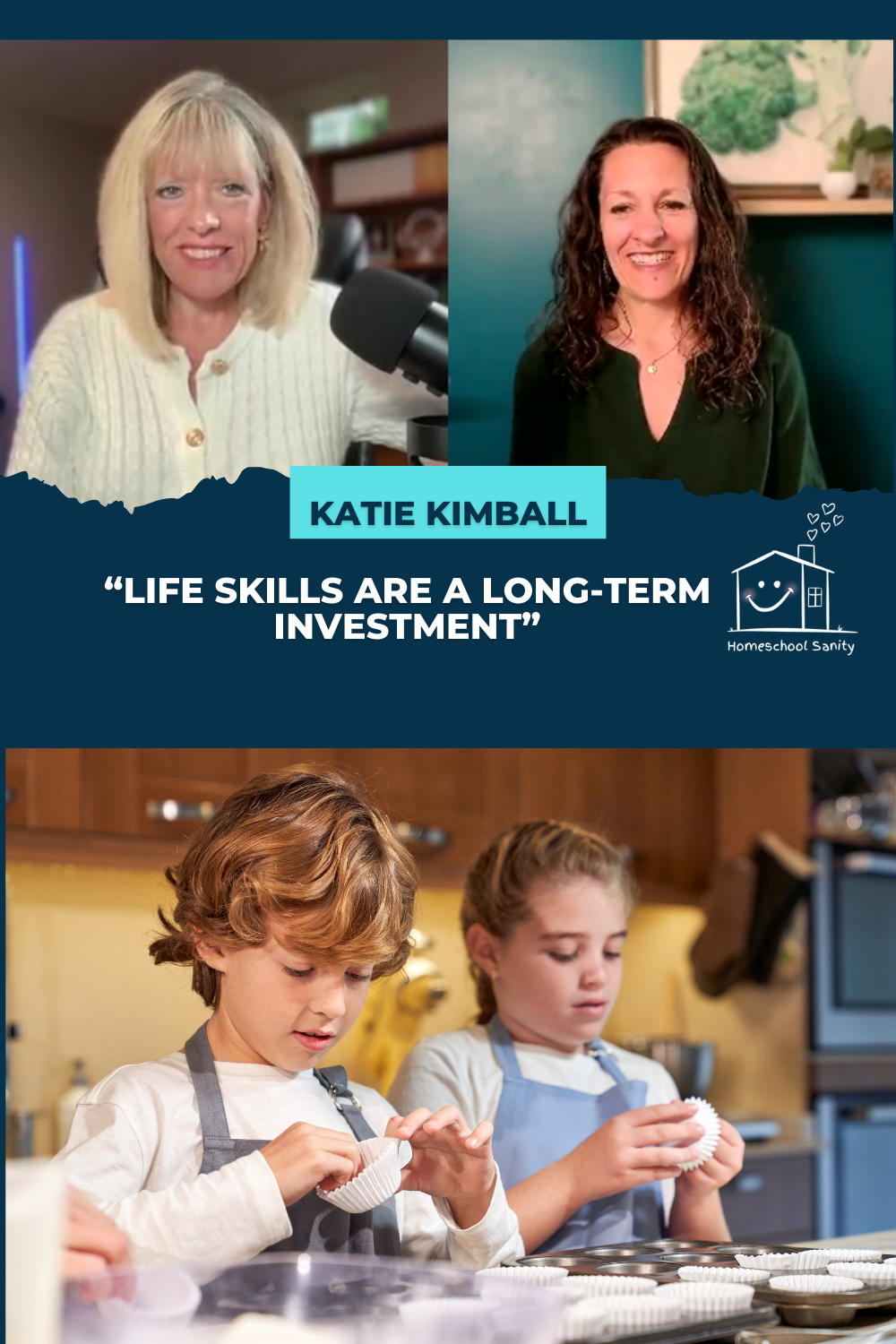
My guest today, Katie Kimball of Kids Cook Real Food, has joined me before to talk about teaching cooking skills. But today she is sharing:

    • motivation for teaching life skills if you’ve been putting it off
    • strategies for incorporating them into daily routines
    • how to balance independence with safety

You’ll want to listen to the end to hear about an exciting free resource your kids will love. Here’s Katie.

I would have loved this resource for my kids! To register for camp now (before you forget), go to kidscookrealfood.com/lifeskillssanity. Then get a head start on teaching one life skill this week.

Have a happy homeschool week!

4 Ways to Teach Life Skills

Finish Well Homeschool Podcast, Podcast #219, 4 Ways to Teach Life Skills, with Meredith Curtis on the Ultimate Homeschool Podcast Network

4 Ways to Teach Life Skills

In “4 Ways to Teach Life Skills,” Episode, #219, Meredith Curtis invites parents & teens to explore the exciting world of adulting. Life Skills help us live useful and productive lives. Some folks call it adulting. In the business world, life skills such as problem solving, conflict resolution, and manners are called soft skills. Teach and learn life skills 4 different ways. Some life skills are “caught” and others are learned intentially. Discover what works best for you!


Powerline Productions, Inc.


Powerline Productions, Inc.

Bringing Homeschool Joy to Families Everywhere!


Show Notes

Life Skills help us live useful and productive lives. Some folks call it adulting. In the business world, life skills such as problem solving, conflict resolution, and manners are called soft skills. These soft skills help people advance in their profession. From brushing teeth to mowing the lawn to balancing a checkbook, life skills are needed by the entire human race.

Caught Not Taught

Many of the life skills we pass on to our children will enter their lives effortlessly on our part. We won’t even realize that we are teaching them to brush their teeth or weed the garden.

Hurricane prep, tipping generously, voting, unplugging pipes, changing locks, washing dishes, laundry, setting the table, communication.

Proactive Natural Living

Sometimes we need to be proactive with children who don’t want to brush their teeth or little boys who hate baths.

Removing hats to pray, standing when older folks enter the room, tithing, serving, hospitality, conflict resolution, manners. Our Kate was shy.

Inserted into Classes

Other life skills I had to learn. My parents were great at managing money but they never talked much about money except to teach me to tithe. I never learned anything about money in public school. My husband came to our marriage tithing and with a commitment to live debt-free which I thought was strange. When the church offered a course on finances, we signed up. It changed our life. We made a budget and set financial goals. My children are much better at managing money than we are because we got such a late jump on it. I included financial management in their high school economics course.

Real Men 103: Leadership

God’s Girls 105: Homemaking

“Give Me a High Level Overview” – High School English

Small group assignments & group discussions in my online courses.

Economics Course – how to start and run your own business.

Serving at Church/ Internships & Apprenticeships

Sound team, worship team, greeting, children’s ministry, sharing testimony, leading Bible study

Internships & Apprenticeships can overlap. Possibilities: with a plumber, car mechanic, doctor’s office, roofer, lawn service, pastor, secretary, business owner.

Sign up for our Newsletter

100 Homeschool Hacks by Meredith CurtisSign up for our updates and get your copy of 100 Homeschool Hacks FREE. Sign up here.


Resources


God Girls 105: Homemaking (1 Credit High School Life Skills/Character Class) by Meredith Curtis Real Men 103: Leadership God's Girls 101: Grow in Christ by Meredith Curtis at Powerline Productions, Inc. PowerlineProd.com Real Men 101: Godly Manhood by Meredith Curtis at Powerline Productions, Inc. PowerlineProd.com
Economics, Finances, and Business God's Girls 104: Motherhood by Meredith Curtis Real Men 102: Freedom, Courtship, Marriage, & Family God's Girls 103: Courship, Marriage, and the Christian Family High School Class


Thank You to our Network Sponsor – CTC Math!

Life Skills Your Kids Need Before They Launch

Life Skills 101 is all about life skills for teens, and in this episode Lisa Nehring lays out six areas your kids need before they launch. She covers food (planning, budgeting, shopping, cooking, and using leftovers), shelter, vocation and work in a gig economy, money, health, and transportation, including how to buy, maintain, and insure a car.

Life Skills Your Kids Need Before They Launch

Join us in the Blue Collar Homeschoolers Group on Facebook.


what your kids need to know before they launch | Life Skills to LaunchThis show is called Life Skills, so let’s talk about 6 Life Skills Areas that will allow your kids to launch!

  • Food – Plan, Prep, Budget, Shop, Cook, Clean, Use Left-overs
  • Shelter -Shop for, save for pay mortgage and insurance
  • Vocation/ Work -what areas make sense for your kids, preparing for the future economies, including Gig Economy
  • Money -how to earn, save, spend, give
  • Health -keeping it, re-building, mental, social, physical, spiritual
  • Transportation – how to buy a car, maintain it, clean it, repair it and insure it.

True North Academy Classes that teach Life Skills:

Personal Finance

Entrepreneurship

Career Exploration Full Year Class

Economics

Other Resources

Joy of Cooking

Usborne First Cookbook


More Homeschool Help from Lisa Nehring

If you want your teen ready to handle real life, Lisa has resources that teach these skills in practical, hands-on ways.

  • Free homeschool resources at Not That Hard to Homeschool: Lisa’s Start Here guide, help for your first 30 days, and her free Typical Course of Study for junior high and high school.
  • The Fourfold Method curriculum from Not That Hard to Homeschool: Gather, Test, Connect, Commit. A simple, repeatable way to help your kids keep what they learn, with a free guide and a full line of books built on the method.
  • Self-paced classes at True North Academy: courses your student can work through on your family’s schedule.
  • Live online classes at True North Academy: accredited classes for grades 7 through 12, taught live by real teachers. Browse high school and junior high classes.

Find more episodes like this one on the Life Skills 101 podcast page.

Life Skills Your Kids Need Before They Launch | Replay

Before your kids head out on their own, they need practical skills before leaving home. Lisa Nehring walks through six areas: food (planning, prep, budgeting, shopping, cooking, and leftovers), shelter, vocation and work, money (earning, saving, spending, and giving), health, and transportation, from buying a car to maintaining and insuring it.

This show is called Life Skills, so let’s talk about 6 Life Skills Areas that will allow your kids to launch!Life Skills Your Kids Need before they Launch

This show is called Life Skills, so let’s talk about 6 Life Skills Areas that will allow your kids to launch!

  • Food – Plan, Prep, Budget, Shop, Cook, Clean, Use Left-overs
  • Shelter -Shop for, save for pay mortgage and insurance
  • Vocation/ Work -what areas make sense for your kids, preparing for the future economies, including Gig Economy
  • Money -how to earn, save, spend, give
  • Health -keeping it, re-building, mental, social, physical, spiritual
  • Transportation – how to buy a car, maintain it, clean it, repair it and insure it.

True North Academy Classes that teach Life Skills:

Personal Finance

Health

Career Exploration Full Year Class

Study Skills 6 Week Summer Class

Study Skills Full Year Class

Economics

Classes in Bible, Theology and Apologetics

Other Resources

Joy of Cooking

Usborne First Cookbook


More Homeschool Help from Lisa Nehring

Teaching life skills does not have to be one more burden, and Lisa has resources that make it a natural part of your teen’s education.

  • Free homeschool resources at Not That Hard to Homeschool: Lisa’s Start Here guide, help for your first 30 days, and her free Typical Course of Study for junior high and high school.
  • The Fourfold Method curriculum from Not That Hard to Homeschool: Gather, Test, Connect, Commit. A simple, repeatable way to help your kids keep what they learn, with a free guide and a full line of books built on the method.
  • Self-paced classes at True North Academy: courses your student can work through on your family’s schedule.
  • Live online classes at True North Academy: accredited classes for grades 7 through 12, taught live by real teachers. Browse high school and junior high classes.

Find more episodes like this one on the Life Skills 101 podcast page.

Life Skills Learned Through Adoption!

On this episode, Lisa Nehring is interviewing fellow podcaster Crystal Niehoff, as they talk about Life Skills Learned through Adoption!Life Skills Learned through Adoption!

On this episode, Lisa Nehring, Director of True North Academy is interviewing fellow podcaster and True North teacher, Crystal Niehoff, as they talk about Life Skills Learned through Adoption!

Crystal shares how her family was involved in Respite Care, Foster Care and private and adoption through Foster Care.

For anyone heading into the world of adoption, recognize that itn can be a “paper pregnancy” that takes longer than 9 months!

Lessons learned through adoption:
1. How to work around and manage their schedule and the schedule of foster and adoption workers.
2. Understanding Mental Health and how to regain it.
3. Kids learn the court system/ foster and adoptive care legalities
4. Meet and interact with case workers
5. Learn about the states/ regions and countries that adopted family members are from
6. Learn flexibility and adaptability
7. Learn about bonding and attachments
Develop a Lifestyle of learning and model being an autodidact for your kids

More Resources from Crystal:
Real Life Spouse Story (article)
LIfe Changing New Year’s Resolutions
Helping Adopted Children Thrive
Tips for Completing Important Steps in Adoption
Homeschooling a Grandchild from over 1000 Miles away (article)
HIstory for Christian Teens podcast with the Niehoff’s! (podcast)

For families dealing with Attachment Disorders
Attachment Disorders
Attachment Disorders in Children

Crystal will be teaching Career Exploration at True North Academy! This is a full year, 1 Credit Class

#1 ALL True North Academy Summer School Classes are now just $69! (regularly $149).

#2  Summer Bootcamp Bundle (best deal!) is just $169! Summer Bootcamp Bundle allows you to choose 3 Summer Classes for an extra 20% off over ala carte classes! With the purchase of any Summer School class collect the following Bonuses, worth over $195!


More Homeschool Help from Lisa Nehring

If your family is growing in unexpected ways, Lisa offers flexible support that adapts as your homeschool changes.

  • Free homeschool resources at Not That Hard to Homeschool: Lisa’s Start Here guide, help for your first 30 days, and her free Typical Course of Study for junior high and high school.
  • The Fourfold Method curriculum from Not That Hard to Homeschool: Gather, Test, Connect, Commit. A simple, repeatable way to help your kids keep what they learn, with a free guide and a full line of books built on the method.
  • Self-paced classes at True North Academy: courses your student can work through on your family’s schedule.
  • Live online classes at True North Academy: accredited classes for grades 7 through 12, taught live by real teachers. Browse high school and junior high classes.

Find more episodes like this one on the Life Skills 101 podcast page.

Life Skills Your Kids Need Before They Launch

Lisa Nehring walks through six areas of life skills before launch that every young adult needs. She covers food (plan, prep, budget, shop, cook, and clean), shelter, vocation and work in future economies including the gig economy, money (earning, saving, spending, giving), health in every dimension, and transportation, from buying a car to maintaining, repairing, and insuring it.

Life Skills Your Kids Need Before They Launch

Join us in the Blue Collar Homeschoolers Group on Facebook.


what your kids need to know before they launch | Life Skills to LaunchThis show is called Life Skills, so let’s talk about 6 Life Skills Areas that will allow your kids to launch!

  • Food – Plan, Prep, Budget, Shop, Cook, Clean, Use Left-overs
  • Shelter -Shop for, save for pay mortgage and insurance
  • Vocation/ Work -what areas make sense for your kids, preparing for the future economies, including Gig Economy
  • Money -how to earn, save, spend, give
  • Health -keeping it, re-building, mental, social, physical, spiritual
  • Transportation – how to buy a car, maintain it, clean it, repair it and insure it.

True North Academy Classes that teach Life Skills:

Personal Finance

Entrepreneurship

Career Exploration Full Year Class

Economics

Other Resources

Joy of Cooking

Usborne First Cookbook


More Homeschool Help from Lisa Nehring

If you want your kids ready to launch with real-world skills, Lisa has practical help to teach them at home.

  • Free homeschool resources at Not That Hard to Homeschool: Lisa’s Start Here guide, help for your first 30 days, and her free Typical Course of Study for junior high and high school.
  • The Fourfold Method curriculum from Not That Hard to Homeschool: Gather, Test, Connect, Commit. A simple, repeatable way to help your kids keep what they learn, with a free guide and a full line of books built on the method.
  • Self-paced classes at True North Academy: courses your student can work through on your family’s schedule.
  • Live online classes at True North Academy: accredited classes for grades 7 through 12, taught live by real teachers. Browse high school and junior high classes.

Find more episodes like this one on the Life Skills 101 podcast page.

Special Replay: Life Skills For Kids

Life Skills | With the advance in technology many major, must-know life skills are forgotten. In this episode, we roll up our sleeves and discuss the important life skills you kids must learn. | #podcast #homeschoolpodcast #lifeskillsSpecial Replay:  Must Know Life Skills – Episode 343

With the advance in technology many major, must-know life skills are forgotten. In this episode, we roll up our sleeves and discuss the important life skills you kids must learn.

With smartphones, there is ready to access information on any imaginable topic – yet our children are at a disadvantage without this handy tool. By life skills, I don’t mean foraging in the forest to hunt and gather, better known as survival skills.

Here is my list and please add to this with your own ideas:

Personal Life Skills

Faith

  1. Convictions – Why you believe what you do
  2. Can you articulate your belief to others
  3. Can you defend your beliefs
  4. A hard look at your faith – and your relationship with Jesus


Communication – Verbal and Non-Verbal

    1. The ability to explain what you mean in a few words
    2. To be respectful and allow others to speak
    3. To listen when others talk and answer the question
    4. Cell phone etiquette – and oral communication
    5. The eyes and posture tell what you think

Critical thinking

    1. To realize that we must think for ourselves – but our parents have our best interests at heart!
    2. To realize that everything we read online is not a truth
    3. The ability to make decisions and solve problems
    4. How to resolve a bad decision
    5. Consequence

Control of Self and Opinion

      1. Everyone does not have to agree with you
      2. Everyone who does not agree with you is not wrong
      3. Allow others to have an opinion however know the difference between opinion and fact
      4. Anger management
      5. Stand by your convictions and know that “your own truth” or “he that defines the term wins” is just talk to make you doubt that you can have convictions.
      6. Self-awareness
      7. Empathy for others

Coping with Stress

    1. Daily stress happens how do you handle it?
    2. What are good ways to cope?
    3. What are bad ways to cope?
    4. How can you have less stress in your life?


Practical Life Skills

    1. Cooking, cleaning, hygiene and taking care of yourself.
      1. Make a sandwich or an entire meal.
      2. Do laundry.
      3. Plan a grocery trip and meals – comparing prices
      4. Clothing shopping and sales!
      5. Personal hygiene and why
      6. How to clean a house – a room!
      7. How to change a light bulb or do simple home repairs
      8. Order at a restaurant
    2. Money management
      1. (Allowance or earn money) – Save – Spend – Tithe
      2. Checking or savings accounts
      3. Understanding credit and why it should be avoided
      4. The difference between credit and debit
      5. Planning for the future
      6. Understanding household budgets
      7. Cost of goods – home, car, food, clothing, etc.
    3. Education and Learning
      1. Are you self motivated?
      2. Where do you find your information?
      3. Do you know about primary sources and what this means?
      4. Can you teach yourself? How?
    4. Writing
      1. Communication in the written form
      2. How to address an envelope
      3. How to write a nice email – or what should be in an email.
    5. Directions
      1. Can you follow a GPS
      2. Can you use a map?
      3. Do you know your general directions (N – S- E – W)
    6. Transportation
      1. How do you go from place to place
      2. Do you understand busses, subways, etc. if you are in a big city?
      3. Do you know how to maintain a car?
      4. Change the oil – or the tires?
      1. Insurance
      2. Social security cards
      3. Medication and things that do not mix
      4. Drinking / Driving etc.
      5. What doesn’t go in the microwave
      6. Cars and carbon monoxide


Life Skills For Kids

Life Skills | With the advance in technology many major, must-know life skills are forgotten. In this episode, we roll up our sleeves and discuss the important life skills you kids must learn. | #podcast #homeschoolpodcast #lifeskillsMust Know Life Skills – Episode 343

With the advance in technology many major, must-know life skills are forgotten. In this episode, we roll up our sleeves and discuss the important life skills you kids must learn.

With smartphones, there is ready to access information on any imaginable topic – yet our children are at a disadvantage without this handy tool. By life skills, I don’t mean foraging in the forest to hunt and gather, better known as survival skills.

Here is my list and please add to this with your own ideas:

Personal Life Skills

Faith

  1. Convictions – Why you believe what you do
  2. Can you articulate your belief to others
  3. Can you defend your beliefs
  4. A hard look at your faith – and your relationship with Jesus


Communication – Verbal and Non-Verbal

    1. The ability to explain what you mean in a few words
    2. To be respectful and allow others to speak
    3. To listen when others talk and answer the question
    4. Cell phone etiquette – and oral communication
    5. The eyes and posture tell what you think

Critical thinking

    1. To realize that we must think for ourselves – but our parents have our best interests at heart!
    2. To realize that everything we read online is not a truth
    3. The ability to make decisions and solve problems
    4. How to resolve a bad decision
    5. Consequence

Control of Self and Opinion

      1. Everyone does not have to agree with you
      2. Everyone who does not agree with you is not wrong
      3. Allow others to have an opinion however know the difference between opinion and fact
      4. Anger management
      5. Stand by your convictions and know that “your own truth” or “he that defines the term wins” is just talk to make you doubt that you can have convictions.
      6. Self-awareness
      7. Empathy for others

Coping with Stress

    1. Daily stress happens how do you handle it?
    2. What are good ways to cope?
    3. What are bad ways to cope?
    4. How can you have less stress in your life?


Practical Life Skills

    1. Cooking, cleaning, hygiene and taking care of yourself.
      1. Make a sandwich or an entire meal.
      2. Do laundry.
      3. Plan a grocery trip and meals – comparing prices
      4. Clothing shopping and sales!
      5. Personal hygiene and why
      6. How to clean a house – a room!
      7. How to change a light bulb or do simple home repairs
      8. Order at a restaurant
    2. Money management
      1. (Allowance or earn money) – Save – Spend – Tithe
      2. Checking or savings accounts
      3. Understanding credit and why it should be avoided
      4. The difference between credit and debit
      5. Planning for the future
      6. Understanding household budgets
      7. Cost of goods – home, car, food, clothing, etc.
    3. Education and Learning
      1. Are you self motivated?
      2. Where do you find your information?
      3. Do you know about primary sources and what this means?
      4. Can you teach yourself? How?
    4. Writing
      1. Communication in the written form
      2. How to address an envelope
      3. How to write a nice email – or what should be in an email.
    5. Directions
      1. Can you follow a GPS
      2. Can you use a map?
      3. Do you know your general directions (N – S- E – W)
    6. Transportation
      1. How do you go from place to place
      2. Do you understand busses, subways, etc. if you are in a big city?
      3. Do you know how to maintain a car?
      4. Change the oil – or the tires?
      1. Insurance
      2. Social security cards
      3. Medication and things that do not mix
      4. Drinking / Driving etc.
      5. What doesn’t go in the microwave
      6. Cars and carbon monoxide