Do I Need a Curriculum for Every Single Subject?

Where a boxed curriculum is worth the money and where it is money you didn't need to spend. Three questions to ask before you buy anything.


No. And buying one for everything is one of the most common first-year money mistakes.

Where curriculum is genuinely worth it

Buy a real curriculum for the subjects that build in a strict sequence, where a gap causes trouble later. That is mathematics, and it is reading instruction in the early years. These are cumulative. Missing a step matters.

For high school, buy for anything that will appear on a transcript and be read by someone outside your family, and for the subjects you do not know well yourself.

Where you can be much looser

History, geography, science in the elementary years, art, and music do not require a boxed program. Good books, documentaries, museums, and conversation cover these beautifully, and children usually remember them better that way.

Nobody has ever been held back because they studied ancient Egypt in a different order than the catalog suggested.

Three questions before you buy

Does this fit how my child actually learns, or how I wish they learned? How much preparation does it need from me on a bad week, not a good one? And can I see enough of it before purchasing to know?

That last one matters. Request samples. Most publishers offer them, and a sample will tell you more in ten minutes than a hundred reviews.

Permission to stop using something

Curriculum is a tool, not a commitment. If you are eight weeks in and dreading it every morning, the money is already spent either way. Continuing to use something that is not working does not recover the cost. It just adds your child’s frustration to the bill.

Listen to this

It is our 13th birthday all month long.

The Ultimate Homeschool Podcast Network turns 13 this October, and we are giving away more than $1,500 in prizes across four drawings. One entry puts you in all of them, and everyone who enters gets Sweet Treats, a gathered-up collection of free resources from the hosts across the network.

Enter the Sweet 13 Giveaway

Science Labs That Actually Work at Home

🌿 This episode is proudly sponsored by Eden’s Table — a Christ-centered herbalism curriculum for K-5 homeschool families. One plant a week, woven through Bible, science, history, art, and Latin.

Try a free week →

📚 Part of our guide: Homeschool Science

Transform your homeschool experience with science labs that actually work and enhance your student's learning through fun experiments.Science Labs That Actually Work at Home

Sponsored by CTCMath.com

Teach science with confidence using hands-on experiments your kids will remember.

🎙️ Replay Notice: This episode originally aired several years ago and is being shared again because the teaching is still relevant. Please note that any promotional offers, coupon codes, pricing, websites, or product availability mentioned during the episode may no longer be valid in 2026.

Can You Really Teach Science at Home?

If the thought of teaching homeschool science feels intimidating, you’re not alone. Many homeschool parents worry most about high school science, especially labs and experiments.

The good news? You don’t need to be a scientist to raise curious learners.

In this replay, Felice Gurwitz shares practical strategies for making science engaging, hands-on, and enjoyable—from kindergarten through high school. Drawing from decades of homeschooling five children, she explains why science isn’t about having all the answers. It’s about encouraging observation, curiosity, and critical thinking.

Whether you’re teaching elementary science or preparing your teen for biology or chemistry, these tried-and-true ideas will help you build confidence.

Listen to the Episode

In This Episode

You’ll discover:

  • Why science is really about exploration—not memorization
  • The five keys to successful homeschool science labs
  • How to use the scientific method without making it overwhelming
  • Simple ways to build a home science lab on a budget
  • Why failed experiments can become the best learning experiences
  • The importance of giving children ownership in scientific discovery
  • Tips for choosing science curriculum that fits your family’s learning style
  • How hands-on labs develop logical thinking and problem-solving skills
  • Why field trips, museums, and real-life experiences make science memorable
  • Thoughts on dissections, virtual labs, and practical science learning

Key Takeaways

Science Begins with Curiosity

Science isn’t simply a collection of facts. It’s learning to ask questions, observe carefully, research possibilities, test ideas, and draw conclusions.

Children learn science best when they’re encouraged to investigate rather than simply memorize.

Five Keys to Successful Homeschool Science

Felice recommends focusing on five essentials:

  1. Develop enthusiasm for science.
  2. Learn scientific vocabulary together.
  3. Practice using the scientific method.
  4. Create memorable hands-on experiences.
  5. Allow children to contribute their own ideas and questions.

You Don’t Need an Expensive Lab

Many useful science tools can be collected over time, including:

  • Magnifying glass
  • Measuring cups and spoons
  • Funnels
  • Thermometer
  • Kitchen scale
  • Eyedroppers
  • Microscope
  • Small containers
  • Timer

Organizing these supplies into labeled bins makes experiments much easier to complete.

Experiments Don’t Have to Be Perfect

One of the biggest misconceptions about science is that every experiment should “work.”

Sometimes the greatest learning happens when results are unexpected. Those moments teach children how real scientists think, troubleshoot, and revise ideas.

Encourage Big Ideas

One of Felice’s favorite stories is about her daughter attempting to stabilize hydrogen peroxide for a science fair project.

Instead of dismissing the idea, she allowed her daughter to investigate—and the experience became a lesson in creativity, persistence, and scientific thinking.

Sometimes our children’s curiosity takes them farther than we imagine.

Textbooks Aren’t the Only Option

Every homeschool family learns differently.

Some families thrive with textbooks.

Others enjoy unit studies, experiments, projects, and discussion.

The goal isn’t choosing the “perfect” curriculum—it’s helping your children understand how science works and encouraging them to think critically.

Hands-On Learning Builds Confidence

Field trips, museums, nature studies, experiments, dissections, and cooperative science labs all give students opportunities to connect concepts with real-world experiences.

Those experiences often become the lessons children remember for years.

Frequently Asked Questions

Can I teach homeschool science if I don’t have a science background?

Yes. Curiosity, preparation, and a willingness to learn alongside your children are often more valuable than having formal science training.

Do homeschool students need science labs?

Hands-on experiences strengthen understanding and help students retain concepts. Many labs can be completed at home with inexpensive materials.

Are virtual science labs enough?

Virtual labs can be helpful, especially when budget or logistics make hands-on work difficult. Many homeschool families combine both virtual and physical experiments.

What’s the best homeschool science curriculum?

The best curriculum is one your family will consistently use. Some families prefer textbooks, while others learn best through unit studies and experiments.

Why is the scientific method important?

The scientific method teaches observation, logical thinking, problem-solving, and how to evaluate evidence—skills that extend well beyond science.

Resources Mentioned

  • Teaching Science and Having Fun (availability and pricing may have changed)
  • Media Angels
  • Hands-on science experiment books
  • Science museums and local co-ops

Final Thoughts

Teaching science at home doesn’t require a laboratory or an advanced degree.

With curiosity, simple materials, and a willingness to learn alongside your children, science can become one of the most rewarding subjects in your homeschool.

Sometimes the best lessons don’t happen when an experiment goes exactly as planned—they happen when your children begin asking better questions.

Author and publisher, Felice Gerwitz of Media Angels, Inc. will discuss tried and true science labs to incorporate science labs within the home – this presentation is taken from her book, Teaching Science and Having Fun.


Day 5 of Homeschool Podcast Gold: Slow Down and Stick With It

“I would attempt to stick with a curriculum and slow it down to meet my child’s level, instead of jumping ship. Sometimes that’s necessary, but I feel I moved my eldest to a different math curriculum and I should have just waited and slowed down to work at their pace.”

Day 5 of Podcast Gold reminds homeschool parents to slow down, meet their child where they are, and stick with what’s working — even if progress feels slow.Every homeschool parent has been there — a curriculum that isn’t clicking, lessons that feel too fast or too hard, and the temptation to scrap it all and start over.

But this gold nugget reminds us of something timeless: sometimes the best progress happens when we pause. 💛 We need a little homeschool pace and patience!

When we slow down and meet our children where they are, we build confidence instead of frustration. We make space for mastery instead of racing through material. And we teach something far deeper than math or grammar — we model perseverance.

That patience creates lifelong learners who know that growth takes time, and that learning at your own pace is still learning.

🎧 Listen & Learn:


In Homeschooling with Technology, Meryl van der Merwe shares practical ways to make your homeschool more efficient — without sacrificing peace.
In her episode 12 Homeschool Tech Hacks, she explains how digital tools can help you stay organized and adjust lessons to fit your child’s pace.

Dr. Melanie’s episode, 12 Homeschool Hacks That Changed Everything, is filled with wisdom, humor, and grace for the busy homeschool parent.
👉 Listen to the episode here

💛 Your Golden Takeaway:


Don’t rush the process. Slow down. Adjust. Stick with it. The goal isn’t to finish faster — it’s to grow stronger.

🏆 Treasure Hunt Tip:


The next Golden Nugget is hidden inside the show notes of 12 Homeschool Gold Nuggest from Finish Well Podcast. Go find your clue — it’s your next piece of Podcast Gold!


🎁 Download the 12th Birthday Treasure Chest and see if it inspires homeschool pace and patience in your homeschool!


We’re celebrating 12 years of the Ultimate Homeschool Podcast Network with a gift just for you! Download our Podcast Gold Treasure Chest — a free bundle filled with homeschool resources, printables, and special offers from our incredible partners. Plus, when you download, you’re automatically entered to win a $50 Amazon gift card! 🥳

No purchase necessary — this is a free resource made possible by our generous sponsors: Media Angels, True North Academy, CTC Math, Math Mammoth, BaseCampEd, Powerline Productions, Funda Funda Academy, Raising Real Men, 7 Sisters Homeschool, and Galaxy Grammar Books.

👉 Download your Treasure Chest now!

🌟 Day 1 of Podcast Gold: Research Before You Dive In

“Do a lot more research on the best curriculum and activities to follow along to.” – Homeschool Mom

Celebrate 12 years of the Ultimate Homeschool Podcast Network! Join the 12 Days of Podcast Gold for daily homeschool wisdom, giveaways, and free resources.If you could start homeschooling all over again, what would you do differently?

For many homeschool parents, this question brings both a smile and a sigh. We’ve all been there — standing in the curriculum aisle at a homeschool convention (or scrolling late at night), trying to decide between the math program everyone swears by and the one that might actually fit our child.

Today’s Podcast Gold Nugget comes from a real mom who’s been there too. She shared this piece of wisdom:

“Do a lot more research on the best curriculum and activities to follow along to.”

At first glance, this might sound simple — but behind it is a story we all share: the moment we realize that homeschooling isn’t about finding the perfect curriculum, but the right one for our family.

The truth? Researching your options isn’t just about products or programs. It’s about understanding your child — their learning style, pace, and passions. Sometimes, that means digging deeper than the glossy catalog or trending social media post. It means asking questions like:

  • What truly lights my child up when learning?

  • What teaching style fits me as a parent?

  • Does this program help us stay consistent and joyful, or does it add pressure?

Homeschooling is a long game — and the gold often lies in slowing down long enough to choose wisely.

🎧 Listen & Learn:
Felice Gerwitz, veteran homeschool mom and founder of the Ultimate Homeschool Podcast Network, shares her own curriculum confessions in Vintage Homeschool Moms Episode 568: Curriculum Confessions – What Worked and What Flopped.

She reminds us that even after 30+ years of homeschooling, she’s still learning what works — and that’s okay. Because homeschooling isn’t about getting it perfect the first time. It’s about growing in grace as you go.

💛 Your Golden Takeaway:

Before you buy your next curriculum, take a deep breath. Pour a cup of coffee. Read reviews, talk to other moms, and pray about what will fit your unique family. Research isn’t wasted time — it’s time invested in peace.

🏆 Treasure Hunt Tip:


There’s a golden clue hidden in the show notes for today’s featured episode! Visit the Vintage Homeschool Moms episode page to find a bonus piece of Podcast Gold.

🎁 Download the 12th Birthday Treasure Chest!


We’re celebrating 12 years of the Ultimate Homeschool Podcast Network with a gift just for you! Download our Podcast Gold Treasure Chest — a free bundle filled with homeschool resources, printables, and special offers from our incredible partners. Plus, when you download, you’re automatically entered to win a $50 Amazon gift card! 🥳

No purchase necessary — this is a free resource made possible by our generous sponsors: Media Angels, True North Academy, CTC Math, Math Mammon, BaseCampEd, Powerline Productions, Funda Funda Academy, Raising Real Men, 7 Sisters Homeschool, and Galaxy Grammar Books.

👉 Download your Treasure Chest now!

Curriculum Confessions: What I’d Do Differently (and Why It Worked Anyway)

Discover homeschool curriculum tips, wins, and flops. Learn how to choose the best curriculum for your family with practical advice and encouragement.Discover homeschool curriculum tips and confessions in Episode 568! Learn what works, what flops, and how to choose the best homeschool curriculum for your family.

Curriculum Confessions – What Worked and What Flopped ~  Episode 568

Why the Right Homeschool Curriculum Matters

Welcome back to Vintage Homeschool Moms! I’m Felice Gerwitz, your host and a homeschool mom of 32 years. I know, I sound way younger! (I hope you think that!) Listen, I’ve learned so much through trial, error, and some amazing wins. Today, we’re talking Curriculum Confessions: What worked and what didn’t. If you’ve ever wondered if you picked the right curriculum or felt stuck with one that’s just not working for you or your family, this episode is for you. We’re diving into practical ideas to help you find what works for your family, with a focus on you. Not Sally-Jane down the street, or that lady who seems to have it all together with the perfect kids. No. You. Because at the end of the day, if you don’t like the curriculum, even if everyone says it is the best, it isn’t going to work for your family.

My goal for this podcast, as well as for the others that represent our network, is to leave you encouraged, equipped, and ready to make choices that bring joy to your homeschool. Let’s get started.

How to Choose a Homeschool Curriculum That Fits Your Family

The truth is, the best curriculum is the one that fits your family’s unique needs, and that can change from year to year as your kids grow. Look at your family and analyze what you need. Watch your kids at play, or if you have high schoolers, what interests them? Adding a mini-unit study or a deeper study will definitely help promote a child’s interests, but introducing them to new topics or stretching their minds is always beneficial.

I’ve mentioned this before in Episode 536, “The Best Homeschool Curriculum,” where we discussed finding what aligns with your kids and your lifestyle. A great place to start is CathyDuffyReviews.com – it’s a goldmine for detailed, expert reviews that help you sort through options without feeling overwhelmed. Trust me, it’s saved me from plenty of curriculum mistakes over the years.

Prioritizing Family Connection in Homeschooling

One thing to remember is that the focus of your homeschool should be on building strong family relationships through learning and education. Most of us prioritize spending time with our children over checking every academic box. I used checklists to keep us on track, as I could easily go off on a tangent. However, I prioritized shared activities, such as read-alouds and hands-on projects. We always had something planned, like a science or history fair. Even if we only presented to our family. For several years, we participated in science fairs, and my daughter won the competition, placing 2nd in the regional science fair and 1st in the state homeschool science fair. My other children were not as interested in the bigger competitions, so we kept it to the local homeschool science fairs. My science fair book even made it on the shelves of some libraries across the state and was named as the top book in God’s World Publishing.

Incorporating Life Skills into Your Homeschool Curriculum

Every opportunity to incorporate school into our homeschool was utilized. We cooked, baked, and worked on larger family projects together. I taught the children how to budget, or we worked on several gardens, not all of which were successful, except for basil. Somehow, we can grow huge basil plants. That didn’t mean we didn’t have a math curriculum, or reading and language arts for the older kids.

My kids were raised with the goal of being ready for life, not just tests. No snowflakes here. I think sports helped (although I was a reluctant sports mom at first; my biggest complaint was the time taken up with practices and weekends for the sport). Aside from that, I spent a great deal of time customizing my own curriculum with living books, nature studies, and creative projects. I eventually wrote books with a co-author who was a scientist, and we developed a four-book series. The Creation Study Guides are available on my website.

Affordable and Flexible Homeschool Curriculum Options

My focus was on creating an educational environment that was tailored to your kids. And finally, affordable options like CTC Math one of our sponsors.

What Flopped in Our Homeschool Curriculum

Now, let’s get to the confessions. As a former public school teacher, I attempted to recreate the school experience at home, but that proved to be a major flop for both my then-only homeschooling child and me, who had some learning struggles. It was horrible. The all-in-one programs were recreating public school at home. It was too rigid and too much like busywork, leaving us all frustrated. Switching to something flexible made all the difference. The math book, especially, was a train wreck, so what did I do? I ordered another one. I soon realized that the younger grades really needed to incorporate hands-on learning, and with that small tweak, it became a success instead of an ordeal. More work for me? Yes. But so worth it.

Practical Solutions for Curriculum Challenges

We used real-world learning, a straightforward phonics program, and turned everyday tasks like grocery shopping into math lessons, keeping things engaging and practical. We loved the nature center, and my son and daughter learned so much! But the biggest obstacle for me was changing the curriculum mid-year. I had such a hard time giving myself permission to do so because of the cost! No one wants to waste money, so often we just plow through and make the best of things. If that is how you feel, then listen to my Vintage Homeschool Moms, “Help! I Want To Change My Curriculum,” I finally made a mid-year switch that brought relief and success.

Fostering Critical Thinking Through Family Discussions

Another thing that worked was making time for family discussions centered on books, ideas, or current events. These conversations spark curiosity and build critical thinking in ways no worksheet can. On the other hand, a significant drawback was pushing through without breaks. I’ve learned that routines are important rather than rigid schedules. We took short breaks between subjects when possible and made time every morning for a devotional, where I read a short Bible story or thought for the day. This allowed us to keep burnout at bay.

The Role of Discipline in Homeschool Success

Truthfully, being fully committed and maintaining a strict approach to child discipline was key. Episode 491, “Homeschool Secret Weapon,” has more details on the topic.

One thing I learned was that I couldn’t be afraid to make a change or thoroughly research before buying a homeschool curriculum. Remember, what your good friend loves and what works for her family may not work for you. I often had friends come over and look at my curriculum, and I did the same if I was interested in something that someone else used.

Why Homeschooling Beats Traditional Schooling

The end result is that a bad day of homeschooling is better than the best day in public or private school. Even co-ops. You homeschool moms and dads are doing incredible work. I so miss the days of traveling and speaking at homeschool conferences. There, I was able to meet face-to-face with moms and dads and spent the entire time discussing and helping families. Even if it meant sending them off to buy someone else’s curriculum instead of my unit studies. I listened and advised accordingly.

Keep experimenting, keep adjusting, and know that every step forward is a win. You can do this! Share this episode with a friend who’s navigating curriculum choices, and let’s encourage each other. Please visit our website to leave a personal comment or connect with us on social media. I’d love to hear what’s working for you or any way I can help you!

Thanks for joining me today. Keep homeschooling and remember you are not alone. Until next time!

Key Takeaways for Choosing the Best Homeschool Curriculum

  • Point 1: Choose what fits your family – The best curriculum matches your kids’ needs and may change yearly; use CathyDuffyReviews.com for expert guidance.

  • Point 2: Prioritize connection – Building family bonds through shared learning experiences, such as read-alouds or hands-on projects, is the best!

  • Point 3: Integrate life skills – Teach practical skills, such as cooking or budgeting, alongside academics to foster well-rounded kids. Expect a lot and you will get a lot back. Remember, discipline is important.

  • Point 4: Keep it simple and affordable – Use flexible, budget-friendly options like the Media Angels curriculum. Unit studies are suitable for K-12 students and can be utilized throughout your homeschooling years by delving deeper.

  • Point 5: Our decsions change – I didn’t plan to homeschool but it turned out great. Here is a past episode of Confessions of a Homeschool Mom.

Struggling with your homeschool curriculum? Share your wins or flops on this post (see below) or on our Facebook page #HomeschoolCurriculum or visit VintageHomeschoolMoms.com to connect and comment!


Snag your bonus BIRTHDAY PODCAST GOLD. Grab the FREE Homeschooling Matters Ebook from Media Angels.

Easy Way Curriculum Planning | Special Replay

easy way curriculum planning | Curriculum Planning The Easy Way? It never gets old, the feeling of excitement OR dread when you are planning your homeschool curriculum. #Homeschool #homeschooling #podcast #easycurriculumEasy Way Curriculum Planning

Special Replay | Episode 252, Easy Way Curriculum Planning

Curriculum Planning The Easy Way?

It never gets old, the feeling of excitement OR dread when you are planning your homeschool curriculum. What is curriculum? It is the books, and the methodology you will use to homeschool your children. I won’t go into all the styles of homeschooling, this has been done in other podcasts.

Thank you to our sponsor, Route 60 – The Biblical Highway. In theaters September 18th & 19th only

Easy Way Curriculum Planning:

An overview of methods and links to these podcasts on the Ultimate Homeschool Radio Network are as follows:

  • Charlotte Mason
  • Classical Method
  • Unit Studies
  • Principle Approach
  • Textbook and Workbook
  • Unschooling and Delayed Academics
  • Homeschooling Elementary Years
  • Homeschooling Middle School
  • Homeschooling 101

There are more, and that is an eclectic approach mixing some of these methods.

For example, I used the Unit Study method for the majority of the elementary years, but I supplemented it with textbooks when needed or unschooling, allowing the children to pursue or go off on tangents that interested them – or an idea that was sparked by our unit study.

This type of learning is the most effective because the children are excited to learn and that is when most “real” learning takes place. I notice this now in my older children. My son was interested in weaponry – making weapons after studying ancient history. This carried on in later years and my son has made throwing stars, knives out of steel, a sword, a bow and arrow, and display cases. It is a fun hobby that he does in his spare time.

My daughter, on the other hand, learned her love for oceanography after studying the topic and went on to Scuba dive, getting her advanced certificates while in college. This daughter has gone on to homeschool her children.

We are going to take a quick commercial break and when we come back we will discuss planning your year – using the 4-Square Planning Method. We’ll be right back.


Okay – where were we? Planning your Curriculum.

  1. Decide your method. Which will you select? It really depends on the method of homeschooling you select on how to plan your curriculum. Here I’m assuming you have the curriculum in hand or are thinking about what you want to do for the coming year. If you study the different methods of homeschooling, textbooks, unit studies or unschooling the variety of options are endless. Regardless to your method you still need to accomplish, even if you are unschooling – that is not using any set curriculum and using student-led topics, you still need to accomplish learning for the year. This needs to be planned at some point and scheduled. If you are using the Classical approach there are various cycles, so you want to look at your student’s age/grade and figure out where they are in the study or approach. Charlotte Mason uses experiential, literature and nature studies. For the Principal each subject is based on Biblical principles and students are taught to think and reason using a Christian worldview and ideas using a notebook method to research, reason, relate and record. It still requires books which takes us to the next point.
  2. Look at how many weeks you will schedule your homeschool. Typically we homeschool 180 days of school, 5 days a week, for a total of 36 weeks. Just divide the number of days a week you want to homeschool into 180 days of school and that will help you. I used a yearly calendar and circled the days we would school in pencil. Just think! There are 52 weeks in the school year. If you homeschool 36 of those weeks it gives you plenty of downtime – time to take a break.
  3. Look at your books – where will you begin? It is different if you are using different methods. Here are some example of two methods I am most familiar with and ways to set them up.
  4. Textbook/workbook – take the number of days you will homeschool, the number of pages in the book and divide the number of pages by days. So if there are 320 pages in your child’s math book and 180 days it will take 1.7 days to complete – so, doing 2 pages per day will allow you to complete the book in 160 days which gives you 20 days of cushion. Cushion time: This is a great relief to homeschool families, to have the time to get ahead of if you take a break, you’ll know how many days you can miss without getting behind.
  5. Unit study – plan your topics for the year. Then, decide how many weeks you will use to study the unit. The best unit studies take at least 6-8 weeks of study. My own Creation Study Guides used this method.  In this amount of time, you can read about the topic, do science or history projects and really delve into the topic thoroughly.
  6. Schedule in time for breaks such as field trips — Schedule time for vacations. Even staycations. Also include breaks for planning, planning time for long weekends, vacations
  7. Field trips were a big part of our homeschool and needs a number all of its own. You can schedule your field trips around the topics you are studying or just schedule your field trip as a stand-alone. We studied the ancient Greeks and Romans and then we decided to visit various restaurants to sample Greek and Roman foods.

Route 60

Route 60: The Biblical Highway will release in theaters nationwide on September
18th & 19th, 2023, where attendees will witness the roads that Jesus walked on.
Discover the history, witness the healing, and realize the hope along Route 60, the
Biblical Highway.

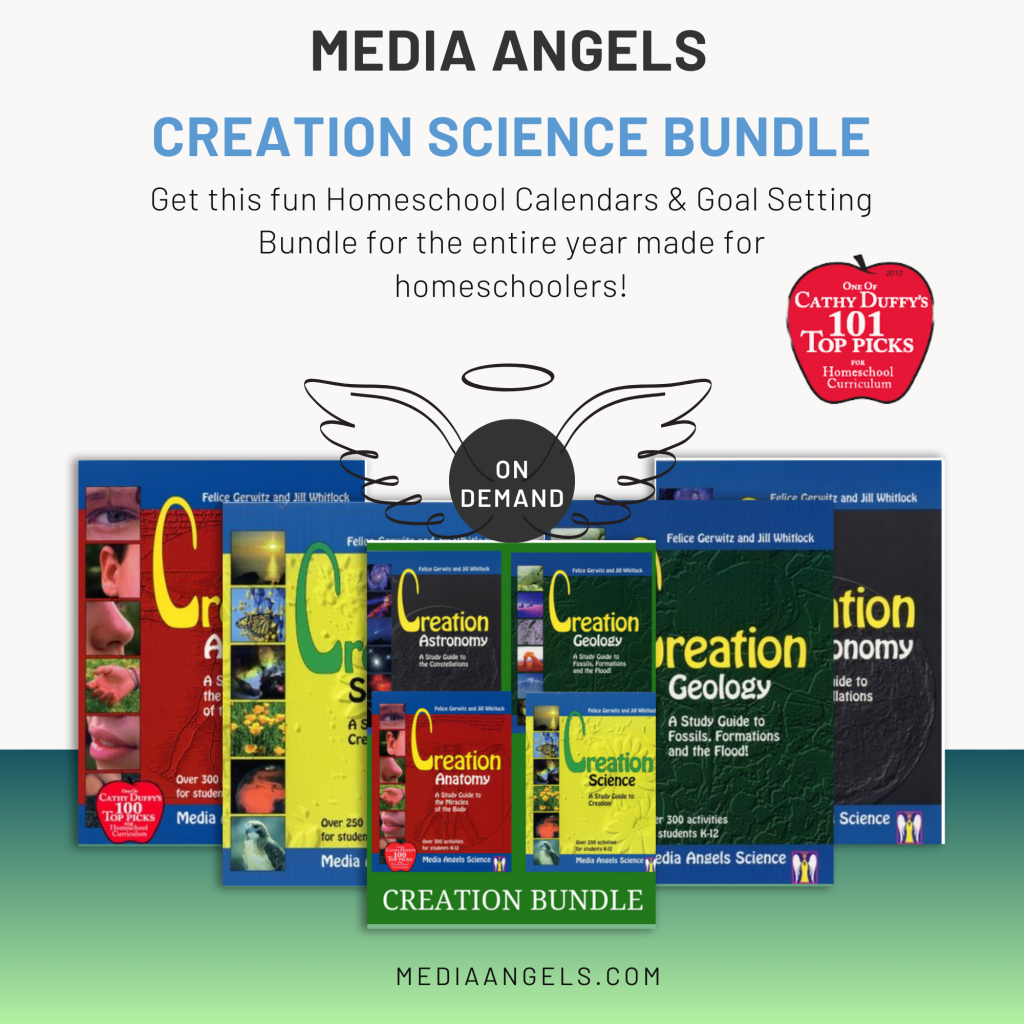
🎓 Resources from Media Angels: Go deeper with the complete Creation Science for Homeschoolers guide — or explore the Creation Science Bundle.

Best Weekend Ever FPEA 2019 Convention

Best Weekend Ever FPEA 2019 Convention

#FPEA2019Convention #WildFloridaLiveFree

FPEA 2019 Conference Join us for your BEST WEEKEND EVER! | #podcast #homeschoolpodcastPodcast #63

FPEA 2019 Conference Join us for your BEST WEEKEND EVER! There are so many reasons to attend FPEA’s annual homeschool convention. Listen in, as we tell you all about our upcoming convention. What’s new? Why should you attend!  Our convention offers more than you will find ANYWHERE else!

The Premier Event for Homeschool Families

May 23-25, 2019

Rosen Shingle Creek Resort and Convention Center, Orlando, FL

Make your plans now to join us in Orlando in May. This is the biggest and BEST homeschool convention in the nation. There is something for everyone–great workshops, exciting events, a huge vendor hall and plenty of opportunities for fellowship!

And, YES!, we are moving–this year the Convention will be held at the Rosen Shingle Creek Resort! It is a beautiful golf resort with four pools and tons of outdoor space for your family.

Learn more about the FPEA 2019 Homeschool Convention and Register Here

How to Choose the Right Curriculum for Your Homeschool

How to Choose the Right Curriculum for Your HomeschoolDo you find sifting through the myriad of curriculum options out there overwhelming? Whether you are new to homeschooling or a seasoned veteran, there is helpful information here for you! In this episode, Richele and Lindsey tackle practical ways to choose the right curriculum for your homeschool student, as well as, how to change mid-year if you feel something is not working out the way you thought it would. Like you, we are always looking for ways to save money, but at the same time increase efficiency in the homeschool room as we also create a quality and ever-interesting education for our children.

Links:

Talking Mom2Mom

Facebook 


How to Choose Homeschool Curriculum That Actually Works
Overwhelmed by homeschool curriculum choices? Learn how to choose homeschool curriculum that fits your child, your goals, and your family’s learning style.How to Choose Homeschool Curriculum That Actually Works

Feeling overwhelmed by homeschool curriculum choices? You are not alone.

One of the biggest stress points for homeschooling parents—especially in the beginning—is trying to figure out which curriculum will actually work for their family. There are so many options, so many opinions, and so much pressure to “get it right” the first time.

The good news? You do not need to find the perfect homeschool curriculum.

You just need to find the curriculum that fits your child, your goals, and your real-life homeschool.

In this episode, we’re talking about how to choose homeschool curriculum that actually works—without overcomplicating the process or buying into the hype.

🎧 Listen now and get practical encouragement for building a homeschool that works.

You Might Also Like

How Do You Choose the Right Homeschool Curriculum?

The best homeschool curriculum is the one that fits your child’s learning style, your family’s goals, and your homeschool approach.

Before you buy anything, it helps to step back and ask a few important questions:

  • What kind of education are we trying to build?
  • How does my child learn best?
  • How much structure do we actually need?
  • How much time and energy do I realistically have to teach?

When you answer those questions first, curriculum becomes much easier to choose.

Why Choosing Homeschool Curriculum Feels So Overwhelming

If you’ve ever opened a homeschool curriculum catalog, walked through a convention hall, or scrolled homeschool groups online, you know the feeling.

There are:

  • endless curriculum options
  • passionate opinions from other moms
  • “must-have” recommendations
  • flashy programs with beautiful packaging
  • and a quiet fear in the background that says…

“What if I choose the wrong thing?”

That fear is real—but it’s also very common.

Most homeschool moms worry about:

  • falling behind
  • wasting money
  • picking something too hard or too easy
  • or choosing something that just doesn’t work for their child

The truth is, most homeschooling families refine their curriculum over time. You are not expected to get it all perfect in year one.

Start with Your Homeschool Goals

Before you buy curriculum, ask yourself:

What do I want this homeschool to accomplish?

That may sound obvious, but it’s one of the most important starting points.

Different families homeschool for different reasons.

You may be prioritizing:

And all of those goals will influence the kind of curriculum that makes sense for your home.

A curriculum that works beautifully for one family may feel exhausting or ineffective in another—not because it’s “bad,” but because it doesn’t fit the mission.

When your curriculum supports your actual homeschool goals, everything gets easier.

Think About Your Educational Philosophy

You do not need a formal education degree to homeschool well—but it does help to think about how you believe children learn best.

Some common homeschool approaches include:

  • Traditional
  • Classical
  • Charlotte Mason
  • Unit Studies
  • Literature-Based
  • Hands-On / Interest-Led
  • Online / Independent Learning
  • Eclectic Homeschooling

You do not have to fit neatly into one box. In fact, many homeschool families are a mix.

But if you understand your general philosophy, you’ll be much less likely to buy curriculum that clashes with how you actually want to teach.

For example:

  • If you love books and meaningful discussions, a workbook-heavy curriculum may frustrate you.
  • If you need structure and clarity, a highly open-ended program may feel stressful.
  • If your child needs movement and hands-on learning, a lecture-based curriculum may fall flat.

Curriculum works best when it fits both the student and the teacher.

Consider Your Child’s Learning Style

This is where so many curriculum decisions either click—or completely fall apart.

A curriculum can be academically solid and still be a terrible fit for your child.

Ask yourself:

How does my child learn best?

Does your child tend to be:

  • Visual – learns best through charts, pictures, videos, and seeing information
  • Auditory – learns well through listening, read-alouds, discussion, and explanation
  • Hands-On / Kinesthetic – learns best through movement, building, doing, and interacting
  • Reading / Writing Oriented – enjoys books, note-taking, written responses, and independent study

Many children are a blend.

When you understand how your child naturally learns, you can make much smarter curriculum choices.

Example:

A child who loves movement and hands-on exploration may struggle with a workbook-only science program.

A child who loves to read and write may thrive with literature-rich history or notebook-based language arts.

You do not need to over-label your child—but paying attention to how they learn can save you a lot of frustration.

Be Honest About Your Teaching Style

This one matters more than many moms realize.

Because sometimes we buy curriculum for the homeschool mom we wish we were… instead of the homeschool mom we actually are 😅

Ask yourself:

  • Do I want something open-and-go?
  • Do I enjoy lesson planning?
  • Do I want to teach directly, or do I need more independent work?
  • Can I realistically prep crafts, projects, and extras every week?
  • Do I want something scripted or flexible?

Be honest here.

If you are juggling multiple kids, working from home, caring for littles, or just need simplicity, that matters.

There is no prize for choosing the most complicated curriculum.

The best homeschool curriculum is not the one that looks the most impressive online.

It’s the one you can actually use consistently in your real life.

7 Questions to Ask Before You Buy Homeschool Curriculum

If you want to make a better curriculum decision, start here:

1. What are my homeschool goals?

What do I want this subject—or this school year—to accomplish?

2. How does my child learn best?

Will this curriculum support their strengths or create constant friction?

3. How much prep time can I realistically handle?

Will this work for my current season of life?

4. Is this curriculum parent-led or independent?

Do I need something I teach directly, or something my child can do more independently?

5. Does it fit our values and worldview?

Does this resource align with what matters most to our family?

6. Will this work for more than a few weeks?

Can I see us still using this after the excitement wears off?

7. Am I buying this because it fits us—or because it worked for someone else?

This one matters a lot.

Just because a curriculum worked beautifully for another family does not mean it’s the right fit for yours.

Common Homeschool Curriculum Mistakes to Avoid

You can save yourself a lot of money and stress by avoiding a few common mistakes.

Buying too much at once

You do not need an entire homeschool bookstore to get started.

Start with your core subjects and build from there.

Buying based on hype

Just because everyone online loves something doesn’t mean it will work in your home.

Choosing pretty over practical

Beautiful curriculum is fun—but usable curriculum is better.

Ignoring your child’s learning needs

A “good” curriculum can still be a poor fit if it doesn’t match your child.

Switching too quickly

Sometimes curriculum needs time. Don’t abandon something after one rough week unless it’s clearly a bad fit.

Assuming one curriculum has to do everything

You are allowed to mix and match.

Many homeschool families use different programs for different subjects—and that’s often the best solution.

You Do Not Need One Box Curriculum to Homeschool Well

This is such an important reminder.

Some families love all-in-one curriculum. Others do much better piecing together resources subject by subject.

There is no one right way to build your homeschool.

You might use:

  • one math program
  • a different language arts curriculum
  • living books for history
  • a hands-on science option
  • and a Bible or worldview resource that fits your family

That is not “doing it wrong.”

That is customizing your homeschool.

And often, that flexibility is one of the biggest strengths of home education.

Helpful Homeschool Curriculum Categories to Explore

If you’re trying to narrow your choices, it can help to think in categories rather than trying to compare everything at once.

Traditional / Structured Curriculum

Great for families who want:

  • clear lesson plans
  • strong structure
  • predictable pacing
  • parent confidence

Literature-Rich / Book-Based Curriculum

Great for families who want:

  • meaningful reading
  • discussion-based learning
  • strong history and language arts
  • less workbook overload

Hands-On / Interactive Curriculum

Great for children who need:

  • movement
  • projects
  • experiments
  • tactile learning

Online / Independent Curriculum

Great for families who want:

  • flexibility
  • more student independence
  • less parent teaching time
  • digital access

Skill-Specific Curriculum

Sometimes the best move is choosing by subject.

For example:

  • one math curriculum
  • one writing curriculum
  • one reading program
  • one science resource

This often works especially well for eclectic homeschoolers.

If You’re New to Homeschooling, Start Simple

This may be the best advice on the whole page:

Start simpler than you think you need to.

You do not need:

  • the fanciest curriculum
  • every elective
  • a perfect system
  • or a giant stack of expensive books

You need a workable plan.

That usually means:

  • a few solid core subjects
  • a daily rhythm
  • room to adjust
  • and permission to learn as you go

Homeschooling gets easier when you stop trying to recreate school at home and start building a learning environment that actually fits your family.

What If You Choose the Wrong Curriculum?

Then you pivot.

That’s one of the gifts of homeschooling.

You are not trapped.

If something truly is not working, you can:

  • adjust it
  • supplement it
  • slow it down
  • change your approach
  • or replace it entirely

That doesn’t mean you failed.

It means you’re paying attention.

Some of the best homeschool decisions happen after a family realizes,
“Okay… this is not working. Let’s try something else.”

That is wisdom, not failure.

Key Takeaways for Choosing Homeschool Curriculum

  • There is no one perfect homeschool curriculum
  • The best curriculum is the one that fits your family
  • Your child’s learning style matters
  • Your teaching style matters too
  • Start simple and avoid overbuying
  • You can always adjust as you go

FAQ: Choosing Homeschool Curriculum

How do I choose the right homeschool curriculum?

Start by considering your child’s learning style, your homeschool goals, and how much parent involvement you realistically want. The best curriculum is the one your family will actually use consistently.

What is the best homeschool curriculum for beginners?

The best homeschool curriculum for beginners is often something simple, clear, and easy to implement. Open-and-go curriculum can be especially helpful for new homeschool families.

Should homeschool curriculum match my child’s learning style?

Yes, learning style can be a very helpful guide. Some children learn best through books and writing, while others need visual, hands-on, or discussion-based learning.

How much homeschool curriculum should I buy?

Less than you think. Start with your core subjects and add gradually. Many homeschool families buy too much in the beginning.

Can I mix different homeschool curriculum programs?

Absolutely. Many homeschool families use different resources for different subjects to create a custom plan that works best for their child.