Already Behind in Your Homeschool? What to Do When the Plan Falls Apart

Already behind in your homeschool by week three? Felice Gerwitz on routine over rigid schedules, counting what got done, and dropping the busy work — Vintage Homeschool Moms PodcastDo you already feel behind? It doesn’t matter if this is week one, week three or even week twenty-three. Sometimes we feel like we’ve accomplished nothing when, in reality, homeschooling is so much more. Tune in for this episode of Vintage Homeschool Moms.

Already Behind in Your Homeschool by Week Three? ~ Episode 587

I hear this every fall. A mom writes me, or it happened to me more often than I care to admit… It is week three and the school year does not look like the plan I made in the summer!

Life happens. Sometimes unexpected company (I live in Florida) or someone was sick. Math books were lost more times than not or took forever. A well-meaning person at church asked how school was going, and I looked at my husband and thought, help! When he asked me what was wrong, I told him, we are already behind!

Hey friends. Thanks so much for joining me. I homeschooled five children for more than thirty-two years. Some weeks were peaceful, and some not so much. There might be the threat of putting them on the next shiny yellow bus that stopped at the end of our street, and I am not proud to admit that. But, even that day was a good day. I’m looking at this from a long lens now, but building character is not just for our kids but for ourselves as well.

Thanks so much to our sponsor for helping keep this show on the air.

One-page printable: http://vintagehomeschoolmoms.com

So – why are you behind?

That is what I had to ask myself, after enough years of doing this. Behind the week I wrote when I planned my six week unit study, when I felt hopeful. Behind a close family friend with older kids and no toddler. Behind an imaginary goal I had for myself that didn’t account for my father, who moved in the year my daughter got married?

I used to treat the planner like it was the boss. If I wrote math at a certain time and we missed it, I felt like I had failed. That is a hard way to live. And it is not how a home school works.

Routine Rather Than Rigid Schedule.

I am more routine rather than a rigid schedule. I have said that for years. After breakfast, we start school, and sometimes school in the form of a Bible story or a continuation of a read-aloud takes place. Then we do chores, the ones that take little time, and then school starts. If breakfast is late, we still start. If math happens after lunch because the morning fell apart, math still happened.

Our goal was to get the kids’ check-off sheets completed in a week’s time, but if it took longer, the subject and page went to the following week.

Did You Have School This Week?

If you prayed, or you opened the Bible. If somebody read. If math got done even once. If you had a conversation with a child that was not about a missing pencil. Then you had school. It may not look like the week you planned. Yet it was still a week of school.

I used to try to make up every page we skipped. All that did was make everyone miserable. If a skill matters, come back to it. Don’t invent extra work just to feel better. The shortcuts that worked for me were a selection of math problems. If the child had mastery, they could move on. Sure, practice makes perfect, and sometimes they need more practice, but we used math books that had a spiral approach; skills were retaught lesson to lesson, so if it was something they knew, we skipped those problems or added more if it was something that didn’t make sense to them or they found difficult.

If you use a Morning Crate (I did a podcast about what to pack in it for multi-aged students), then pack it for the week you are in – if it is going to be a very busy week, make it short. Take things out or leave them in for another day. Ten minutes is still a start. Do not skip the activity just because you cannot do the long version. Consistency is important.

I think that is the key. Skipping things makes us feel guilty, and truthfully, skipping is okay as long as it isn’t chronic. Tackling the hard subjects first is always a good thing, and my older teens did this before breakfast on their own! My second oldest and co-author on the Truth Seekers Mystery Series would rather write than do math. So, she did Math first thing in the morning before she came down for breakfast so that later in the afternoon she could devote herself to writing. Finding your child’s passion is another key.

If You Feel Stuck

Take a minute, with a nice cup of strong coffee if I have it, and reanalyze your curriculum. Look at what you are doing and ask, what is worth keeping? What can wait two weeks, and what may get tabled until the new year? What did I buy in August that is making it hard to complete my school day? One year I purchased a composer’s curriculum. I love Classical music, but I am not musical. I had grand ideas for teaching my children the classics: letting them listen to the music, pick out the instruments of the orchestra, and identify composers from their most notable pieces.

A great idea, but the wrong time to implement. I decided this would be a great unit for Christmas break. Let’s just say it wasn’t. I ended up keeping this for an end-of-year activity when things were winding down, and it was the perfect lesson for when the math books were completed for the year and projects were finished.

At different times, we had a four-day week. This shorter week was wonderful! It was a goal we could keep with one day to “make up school” or have an outing if we were caught up. Four days instead of five is a stretch; it made things go so much better, and yes, some days it was just three.

The thing is, school still got done, and my kids learned differently than most. I had the high achievers and the high achievers who struggled to read, to spell, or to do math. Yet all my now-adult children are successful. Three graduated from college with top honors and my math-before-breakfast daughter graduated college in three years. The other two own their own business.

I wish someone had told me that it was more important to spend time with my kids than to chase an elusive curriculum that isn’t going to get them to heaven!

If Someone Asks About Standards

Thankfully homeschooling is here to stay (please, Lord) and no one is as shocked about it like they were when I got started. You don’t owe anyone any details about how things are going, not at church or in the grocery line. I would say something like: we are covering what my child needs this year. We keep records. Thank you for caring.

I was with my daughter, who had four little ones, and someone rudely asked if they were all hers. I closed my eyes, waiting for her to say something snarky like, “No, there is a sale on aisle five.” Instead, she smiled sweetly and said, “Yes, all mine, and we homeschool, too!”

Friends, you homeschool for your kids, and it is a decision you and your spouse made together; it is no one else’s business. If you must, write down what your kids learned at the beginning of the year and what they know now at different times of the year. This is not for anyone but you.

Every year I thought we accomplished nothing was a year we did the most ever. We compiled a sampling of the children’s work one time a year – and when we did I couldn’t believe all we’d done – the next year we saved special papers or pictures from events during the year so I didn’t feel that way again!

Your life, your homeschool is your own. If that goal is weighing you down, move it back, you have my permission. Get rid of the busy work. Sometimes it is wonderful to have copy work, but other times it gets in the way. Focus on the most important things, family, relationship and God the rest will come into place.

Scripture

“The steadfast love of the Lord never ceases, his mercies never come to an end; they are new every morning; great is thy faithfulness.”
— Lamentations 3:22–23, RSVCE

God’s love never ceases, and our love for our children is why we, as homeschool parents, make sacrifices. The blessings way outweigh anything we put into it. Just watch: week four will be amazing, and the next day and the next? Why? Because you have a new attitude. Attitude sets the tone. It starts with you and with me.

Join the Sweet 13 Birthday Giveaway
The Ultimate Homeschool Podcast Network turns 13 this October! We’re celebrating all month with more than $1,500 in prizes for homeschool families, drawn on four Fridays. One sign-up keeps you in every drawing. Enter the Sweet 13 giveaway here.

Resources from Media Angels

More at https://mediaangels.com.

More Listening

  1. Morning Time for Mixed Ages
  2. Time Boosters for the Busy Homeschool Mom
  3. Fine-Tune Your Homeschool Day
  4. The Best Homeschool Scheduling Advice
  5. Avoiding Homeschool Pitfalls

If this helps, share it with a friend. Until next time, be blessed. Have a blessed homeschool week!


Balancing Homeschooling and Housework (Replay)

Balancing Homeschooling and Housework | Balancing Homeschooling and Housework. This week on the podcast, Crystal shares some sanity-saving secrets that have helped her maintain her composure and strike a balance between homeschooling and housework | #militaryhomeschoolmom#militarymoms #homeschooling #TipsHomeschooling #FosteringResiliencewithMorganFarr #FosteringResilience #TeachingSubjectsYouDon’tKnow #TeachingSubjects #BalancingHomeschoolinandHousework #HomeschoolinHouseworkBalancing Homeschooling and Housework

S2, E9 – Balancing Homeschooling and Housework. This week on the podcast, Crystal shares some sanity-saving secrets that have helped her maintain her composure and strike a balance between homeschooling and housework.

Life as a homeschooling mom is a dynamic blend of nurturing young minds and maintaining a harmonious home. It’s a challenging balance that many moms embrace wholeheartedly because it offers the priceless gift of witnessing their children’s growth and development up close. However, it’s also a task that can be overwhelming at times, especially when combined with the demands of housework. But fear not, for over the years, Crystal has discovered some sanity-saving secrets that have helped her maintain her composure and strike a balance between these two essential aspects of life.

Homeschooling and Housework Made Easy

1. Establish a Flexible Routine

2. Prioritize Tasks

3. Involve Your Kids

4. Embrace Technology

5. Set Realistic Expectations

6. Create a Dedicated Homeschooling Space

7. Implement Time-Saving Cleaning Strategies

8. Take Breaks and Self-Care Seriously

9. Join a Homeschooling Support Group or Co-op

10. Seek Professional Help if Needed

Homeschooling and housework together might sound like a handful, but it’s a journey full of growth and heartwarming and hard moments. As a homeschooling parent, you’re in for a front-row seat to witness your children’s intellectual and emotional development, and it’s an amazing blessing!

Please share your tips for balancing housework and homeschooling!

…

Join Crystal and her guests each week as they bring relevant information to equip you, stories to encourage you, and content to inspire you. You don’t have to go it alone; tune in to the Military Homeschool Podcast and be energized in your military homeschooling journey!

How to listen:

  1. Subscribe on Apple Podcasts, Google Podcasts, iHeartRadio, or Stitcher
  2. Subscribe on your favorite podcast listening app
  3. Or listen right here (just scroll down)

Got questions, comments, or show topic ideas? Contact Crystal via email at militaryhomeschoolpodcast@gmail.com or connect with her on Facebook, Instagram, or Twitter.

Please subscribe, follow, and share with all of your military homeschooling friends!


How to Build a Weekly Homeschool Schedule That Works (Replay)

Weekly Homeschool Schedule | Your weekly homeschool schedule is perhaps one of the most important aspects of an easy flowing and on track homeschool year. #homeschool # #homeschoolschedulePlanning Your Weekly Homeschool Schedule Episode

Your weekly homeschool schedule is perhaps one of the most important aspects of an easy flowing and on track homeschool year. Yet, I have a love-hate relationship with all things scheduled. In this podcast, I share tried and true methods, the difference between schedules and routines and how to mesh a free-spirit with a paper-trail that validate that yes, you did homeschool this year.

Please share and subscribe to this podcast! 

Sponsor: Harper Collins NIV Application Bible

Your next Bible is the Harper Collins NIV Application Bible. Learn more here.

When you think about planning your homeschool you think big picture. The overall goals of your homeschool as well as the books and subjects you will cover that year. When you consider your weekly homeschool schedule, now it is time to break it up into manageable bits that can be accomplished in a day, and ultimately in one week. You can easily manage this plan with a good planner. I love the Well Planned Gal planners and wish these were available when I began homeschooling.

Planning means asking yourself specific questions before you plan your weekly homeschool schedule:

  1. Do you like specific schedules or are you a routine planner?
  2. If you like schedules – will you make an overall schedule of your homeschool day, and then break it up for each of the kids?
  3. Or if you like routines. Will you set up some daily routines – an overall and for the kids?
  4. Or if you like some scheduling or some routines, how will you combine this in your overall and daily homeschool plan.
  5. Does your student have extracurricular activities such as dance, art, music lessons, sports that they need to practice or train for?
  6. Do you have multi-aged children? I’ve included a screenshot of my daughter’s homeschool planning sheets and how she incorporates the older children’s school with the younger ones. Having specific school only learning toys for the younger children is a wonderful way to keep them occupied as you school.

Once you answer these questions it will be easier to make a plan. As you probably realize without me telling you is that homeschoolers rarely fit into one, nice, neat box. There are things that overlap our day. Besides school, we have the busy life of a mom with all the household chores and obligations. I will share some ways to simplify this with you – and hopefully, it will take some of the stress of planning away.

The most important take away in this podcast is to realize that you can change and tweak your plan all year long. If something does not work don’t think you have to continue it all year long. *Listen to this podcast as Felice shares her math curriculum nightmare her first year of homeschooling her son, Neal.

Depending on the method you use, there will be a different emphasis on how you set up your day and your weekly homeschool schedule.

Here is an example of several methods and how you might structure your week – and then work on your daily schedule. One thing I have not discussed is homeschooling co-ops. I have a love-hate relationship with co-ops because as you’ve probably guessed I’m an overachiever and many times the bulk of the teaching and planning. I did like co-ops for teaching lab sciences such as biology especially and when the children were younger with group projects such as history—studying a period of time, or an indebt unit on creation science. (Listen to the CreationSciencePodcast.com).

If you are involved in a co-op your daily schedule will work around co-op times. Some co-ops are very involved where the main bulk of the teaching is completed at a paid facility on Monday and Wednesday and the parent homeschools on Tuesday, Thursday and Friday or vice versa. If you are part of a co-op you will plan with the organization or your group of homeschool friends and work out the details of what you will be responsible for teaching at home.

One thing – and I plan to do a podcast on the role of a homeschool teacher. A teacher is a facilitator –someone who engages your child in learning in a way that is interesting and enticing a child’s natural curiosity to learn. We all hear stories of the teacher’s that love to “blow things up,” to gain a child’s attention. We as moms with so much on our plate, especially if we are teaching multiple children or grades may feel this is too much. One bit of advice, allow your child time to explore and delve into the things that interest them, and you can provide these things through time. Again, I don’t have the time I’d like to explain more in this podcast, but it is upcoming soon!

My advice, if you are not using a set curriculum is to look at what you’d like to accomplish for the week, and then break it down into days.

Obviously, if you are unschooling it will surround your child’s interests as the basis of studying. If you have a budding chef, you may plan your day around a food shopping list, time to experiment, the chemistry of foods and mixtures, temperatures and how the effects cooking, nutrition and foods effect on the body.

So planning for your weekly homeschool schedule may look like this:

  1. Monday – decide on what you want to cook, collect different recipes, compare them and make a list of ingredients.
  2. Tuesday – studying the nutritional effects of the ingredients and how to make a healthier version –editing the ingredients list.
  3. Wednesday—look at the temperatures needed to cook. Study the effects of chemical reactions in the food.
  4. Thursday – Friday – purchase and create various versions of the recipe – tweak and enjoy.

While unschooling is allowing your child time to explore a subject or area of interest, those who do it well have a loose organization of skills that can be compiled before or after your child has experimented, researched or learned.

Those who use Thomas Jefferson or the Classical Method will have particular books or studies and a well planned day filled with reading and study that builds upon itself year after year.

Unit Studies:

For unit studies, your days will look different as well. You may have a Monday – Wednesday schedule as well as a Tuesday – Thursday schedule that are the days for reading or hands-on projects. Friday will be the catch up day. With unit studies, you will incorporate routines such as daily math and perhaps reading. Or your reading and writing will surround your subject topic.

Unit studies are immersion at it’s best – a study of a topic such as American History or Government with a culmination of a visit to a history museum or political office in town. It can center, as my curriculum does on Creation topics such as Creation science – a general overview or Creation Geology, Creation Astronomy or Creation Anatomy.

Specific Weekly Homeschool Schedule: Using books or text books/ workbooks

How many hours will you homeschool? Is it three, four or five times?

  1. What days will you homeschool
  • Monday through Friday
  • Monday through Thursday
  • Friday – catch up day
  • ix weeks of study and one week break, year round?

2. Daily Routines/ Subjects

  • Pray each morning
  • Bible reading or copy verse
  • Journal

3. What subjects do you want to cover each day or every other day?

  • Math – daily
  • Reading – daily
  • Writing/ Language Arts –spelling, vocabulary (two or three times a week)

Other subjects

  • History – two or three times a week alternating with …
  • Science –two or three times a week
  • Music – one time a week
  • Art – one time a week
  • Physical Education – daily
  • Health – half-year, first or second semester
  • Technology – coding or using technology in the classroom

4. Additional Assignments

  • Projects such as Science or History Fair
  • Writing or term papers
  • Training or Practice
  • Schedule in your child’s practice time

5. Creating a family schedule of important events.

  • Holiday or Special Events
  • Schedule planning time
  • Plan for holidays upcoming
  • Children’s events – sports, dance, etc.
  • Birthdays and family celebrations


Be sure to print out the schedule sheets on the podcast page and I hope you enjoy your new school year!


How To Be Consistent In Your Homeschooling

Hey homeschoolers! I am excited to be back with you after my month long vacation. I especially had a wonderful time meeting many of you at the great homeschool convention in St. Louis.

This week I am addressing a topic that I desperately need help with. That is, how to be a consistent homeschooler. As we consider the new homeschooling year, our thoughts inevitably turn to the days that follow those exciting back-to-school days. I’m going to share with you the tips that I’ll be using to stay consistent this year.

How to Be a Consistent Homeschool Mom

Before we dive into that topic, however, I want to invite you to join me on the Psychowith6: Homeschool Sanity Facebook page on Friday, August 4 at 4 Eastern, 3 Central, 2 Mountain and 1 Pacific. I will be giving away five copies of The Organized Homeschool Life, the book that can not only help you be consistent but organize every aspect of your homeschool life in just 15 minutes a day. If you can’t join me live for the flash giveaway, you can purchase the book for 50% off in honor of my 50th birthday, August 4th only.

Read the blog post

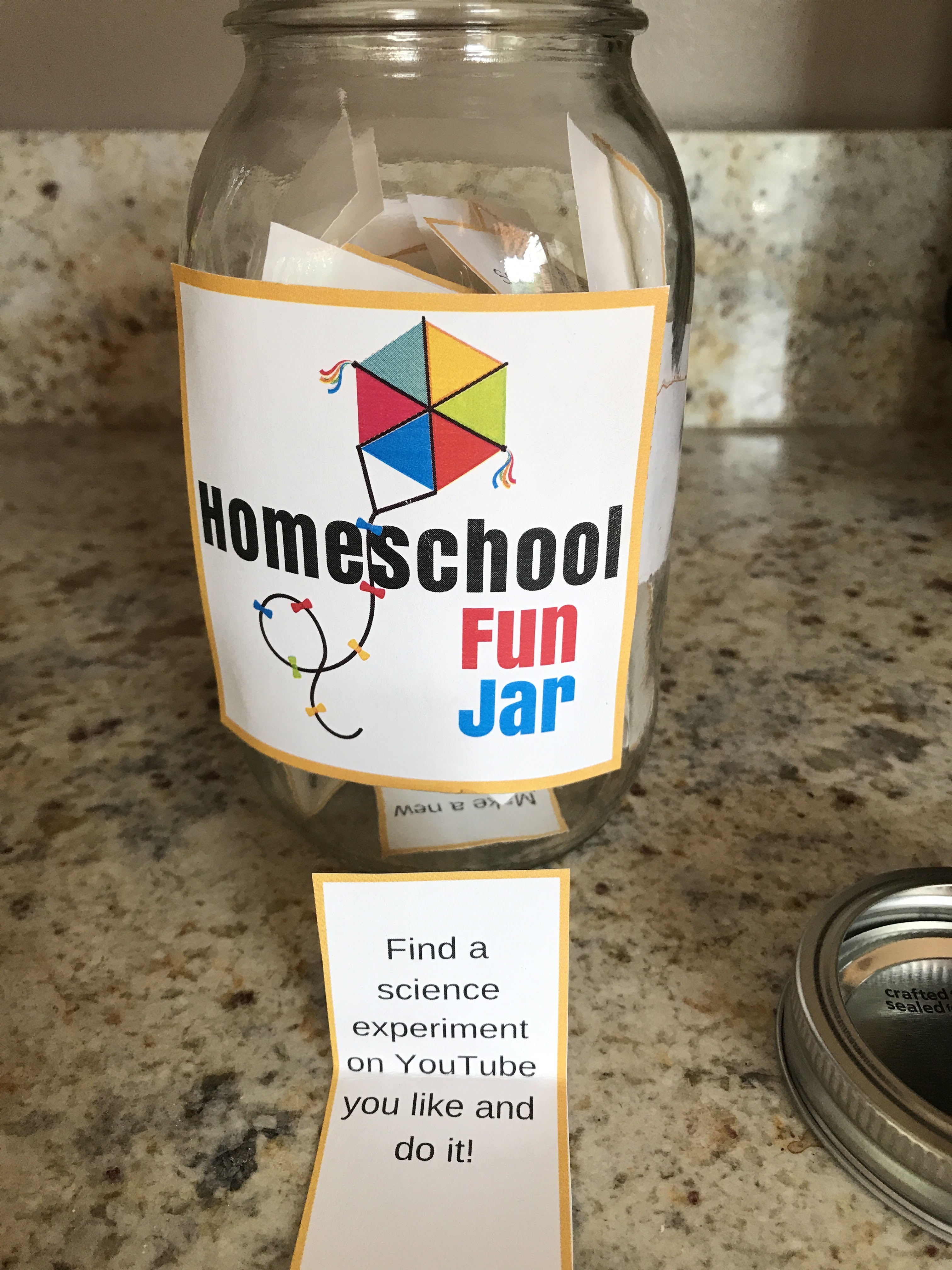
Claim your Homeschool Fun Jar printables

In thinking about consistency, I realized that it is highly related to personality. Those of you who have heard me speak about personality know that my typology of choice is that developed by Florence Littauer, author of Personality Plus. There are four basic personalities which can create combinations. But today I’m only going to review the four main personalities, so  I can share tailor-made tips for helping you to become more consistent.

The solution to inconsistency for the popular sanguine personality lies in planning for a variety of fun activities throughout the school year.

To keep things exciting, you could even create a jar of fun ideas for your homeschool and choose one randomly. I created one for my family and you can steal it when you subscribe. Add your own ideas, too! Click the image below to find the link to download your copy.

Homeschool Fun Jar printables

Alternatively, you could ask your children to take turns planning fun days. Just do something to keep the homeschooling process exciting.

One of the best solutions for remaining consistent as a homeschooling mom who needs to have some control is to get regular feedback on what you’re accomplishing. I did an interview with Deborah Bell about her Ultimate Homeschool Planner and how to plan your homeschool year that you will appreciate.

Another way to feel that you are more in control is to take a leadership position.

The Perfect Melancholy personality needs to adopt a new definition of consistency.

The other thing you can do as a Perfect Melancholy homeschooler is to communicate your needs to your family.

The Peaceful Phlegmatic homeschooler can be consistent this homeschool year by keeping the homeschooling routine and curriculum easy. What are some ways to make homeschooling easy? Listen to the podcast episode I did on how to homeschool in less time for ideas.  If you need some recommendations for curriculum that is an alternative to what you have been using, please join our homeschooling support group– HomeschoolScopes.tv on Facebook. In that group you can ask any questions you have about curriculum and  get an array of very helpful answers.

How to Achieve Homeschool Consistency Regardless of Personality

Now that I covered some basic tips for the various personality types, I have one major recommendation for you, regardless of your personality. That is to make your homeschooling a habit. Know that you can definitely be Spirit-led in your day-to-day homeschooling, but I believe the Lord would have us be consistent the majority of the time. Develop a morning routine, an afternoon routine, and an evening routine. I tell you how here and in The Organized Homeschool Life.

By following these steps, you can be a consistent homeschooler this year. I am very hopeful as I look forward to this upcoming homeschool year with these tips in mind.

Learning How to Budget Your Time

Learning to Budget Your Time | learning budget timeTake control of the time God has given you to have a more productive homeschool year and to cultivate a more peaceful environment at home.  Join Lindsey this week on this podcast from Talking Mom 2 Mom.

Helpful Link from the Talking Mom 2 Mom Podcast’s Blog:

5 Ways to Declutter Your Schedule: Stop Being Busy and Start Being Productive 


Other Talking Mom2Mom Links:

Talking Mom2Mom Website

Facebook Page 

Podcast Homepage

From the Blog:
5 Ways to Declutter Your Schedule: Stop Being Busy and Start Being Productive!
by Lindsey S
I joke that my days are fueled on coffee, stress, and the grace of God, but honestly, that isn’t too far from the truth. I find myself rarely feeling content to just be still because my mind is always racing to the next thing on the list. If I am sitting with my husband in the evenings, I am thinking about how messy the house is. If I am homeschooling the kids, I am obsessing over all that needs to be completed at work. When I am working at home, I feel guilty because I would rather be with my kids.

I do many things, but I never do any of them well, because I am doing too much.

As women, wives, and mothers we have an unrivaled ability to manufacture guilt about the things we can’t control and we have a debilitating habit of adding more to our plates that only exacerbates the chaos.

Maybe you are struggling with all of the same emotions and thoughts that I have. Have you tried for years to fix whatever is deficient within you to make yourself manage your time more effectively? Do you awake with grand plans for your day but the moment your schedule is diverted you are scrambling for a grip as your day slips through your fingers? Do you battle regret, anxiety, discontentment? Do you feel like your health is failing due to years of unfettered stress?

Busy moms everywhere want a dose of the Proverbs 31 woman’s initiative, a schedule that works, and a nap, am I right? Here are 5 ways to inject some more discipline in your life to render the results that your heart longs for. (Continue…)